Sunnyvale visitors feeling welcome and participating in Iizuka's annual Kaido Festival in October 2025 |
Sunnyvale visitors feeling welcome and participating in Iizuka's annual Kaido Festival in October 2025 |
2026: Navigating The New Year with Our Friends In Iizuka, Japan |
2026: Navigating The New Year with Our Friends In Iizuka, Japan |
BY RON ZIELINSKI, SSCA President |
BY RON ZIELINSKI, SSCA President |
I find the Japanese tradition of cleaning every corner at the end of the year to be inspiring: out with the dirt and last year’s bad luck and welcome to the new year with a fresh attitude. 2025 was a challenging year to digest. For perspective, to paraphrase Lord Palmerston in 1848, countries have no permanent friends or permanent enemies, only permanent interests. So as the countries of the world pursue their eternal interests, can sister city relationships build a better world? I’ll respond with another quote, cited by Theodore Roosevelt: “Do what you can, with what you’ve got, where you are.” Sunnyvale and Iizuka create new cross-cultural friends every year. I believe that true cooperation only exists when both sides have: - Mutual respect
- Mutual understanding, and
- Mutual intent
When we expand those three arenas, we increase our chances of an improved future. Our sister city exchanges enhance each of these things by doing what we can: creating opportunities for cross-cultural exchanges; with what we have: people committed to life-enhancing programs; and where we are: in our sister cities, sending overseas travelers to learn about and from each other. 2026 offers more opportunity to do these things with a fresh attitude. |
I find the Japanese tradition of cleaning every corner at the end of the year to be inspiring: out with the dirt and last year’s bad luck and welcome to the new year with a fresh attitude. 2025 was a challenging year to digest. For perspective, to paraphrase Lord Palmerston in 1848, countries have no permanent friends or permanent enemies, only permanent interests. So as the countries of the world pursue their eternal interests, can sister city relationships build a better world? I’ll respond with another quote, cited by Theodore Roosevelt: “Do what you can, with what you’ve got, where you are.” Sunnyvale and Iizuka create new cross-cultural friends every year. I believe that true cooperation only exists when both sides have: - Mutual respect
- Mutual understanding, and
- Mutual intent
When we expand those three arenas, we increase our chances of an improved future. Our sister city exchanges enhance each of these things by doing what we can: creating opportunities for cross-cultural exchanges; with what we have: people committed to life-enhancing programs; and where we are: in our sister cities, sending overseas travelers to learn about and from each other. 2026 offers more opportunity to do these things with a fresh attitude. |
|
|
Osechi ryori and Kyoto style Ozoni soup in my moms house on New Year's Day 2026! |
Osechi ryori and Kyoto style Ozoni soup in my moms house on New Year's Day 2026! |
New Year’s Eve and New Year in Japan |
New Year’s Eve and New Year in Japan |
BY KAORI ROTHENBERG, SSCA Team Volunteer |
BY KAORI ROTHENBERG, SSCA Team Volunteer |
In Sunnyvale, many people probably welcome the New Year by watching the NYC ball drop that happened three hours earlier or by attending parties. In Japan, where I was born and raised, there is no time difference within the country, so everyone in Japan welcomes the New Year at exactly the same time. On New Year’s Eve, people sit under a kotatsu, a heated table, and about one-third of the Japanese population watches a TV program called Kōhaku Uta Gassen, a singing competition where male singers compete on the white team and female singers on the red team. As midnight approaches, people listen to the ringing of joya no kane, temple bells, and eat toshikoshi soba, noodles eaten to mark the passing of the year. Some people then participate in hatsumōde, where they go directly to a shrine at midnight for their first shrine visit of the year, while others go to sleep and visit shrines later on New Year’s Day. On New Year’s Day, the whole family gathers to celebrate with osechi ryōri, special foods with symbolic meaning packed in stacked lacquered boxes, and ozōni, a traditional soup. Children receive otoshidama, New Year’s money, from adults. Ozōni varies greatly by region, especially in the type of soup and mochi used. In Kyoto, where I grew up, it is a completely white soup made with kombu broth and white Saikyō miso. It contains round rice cakes, round slices of daikon radish, and round taro, symbolizing the wish that everything will be resolved smoothly and harmoniously. Adult men traditionally eat a larger type of taro called kashira-imo, symbolizing the hope of “taking the lead.” The first three days of the New Year are considered the most important days of the year. Outside of major cities, most shops and restaurants are closed, and people spend the time eating osechi with their families and visiting relatives. |
In Sunnyvale, many people probably welcome the New Year by watching the NYC ball drop that happened three hours earlier or by attending parties. In Japan, where I was born and raised, there is no time difference within the country, so everyone in Japan welcomes the New Year at exactly the same time. On New Year’s Eve, people sit under a kotatsu, a heated table, and about one-third of the Japanese population watches a TV program called Kōhaku Uta Gassen, a singing competition where male singers compete on the white team and female singers on the red team. As midnight approaches, people listen to the ringing of joya no kane, temple bells, and eat toshikoshi soba, noodles eaten to mark the passing of the year. Some people then participate in hatsumōde, where they go directly to a shrine at midnight for their first shrine visit of the year, while others go to sleep and visit shrines later on New Year’s Day. On New Year’s Day, the whole family gathers to celebrate with osechi ryōri, special foods with symbolic meaning packed in stacked lacquered boxes, and ozōni, a traditional soup. Children receive otoshidama, New Year’s money, from adults. Ozōni varies greatly by region, especially in the type of soup and mochi used. In Kyoto, where I grew up, it is a completely white soup made with kombu broth and white Saikyō miso. It contains round rice cakes, round slices of daikon radish, and round taro, symbolizing the wish that everything will be resolved smoothly and harmoniously. Adult men traditionally eat a larger type of taro called kashira-imo, symbolizing the hope of “taking the lead.” The first three days of the New Year are considered the most important days of the year. Outside of major cities, most shops and restaurants are closed, and people spend the time eating osechi with their families and visiting relatives. |
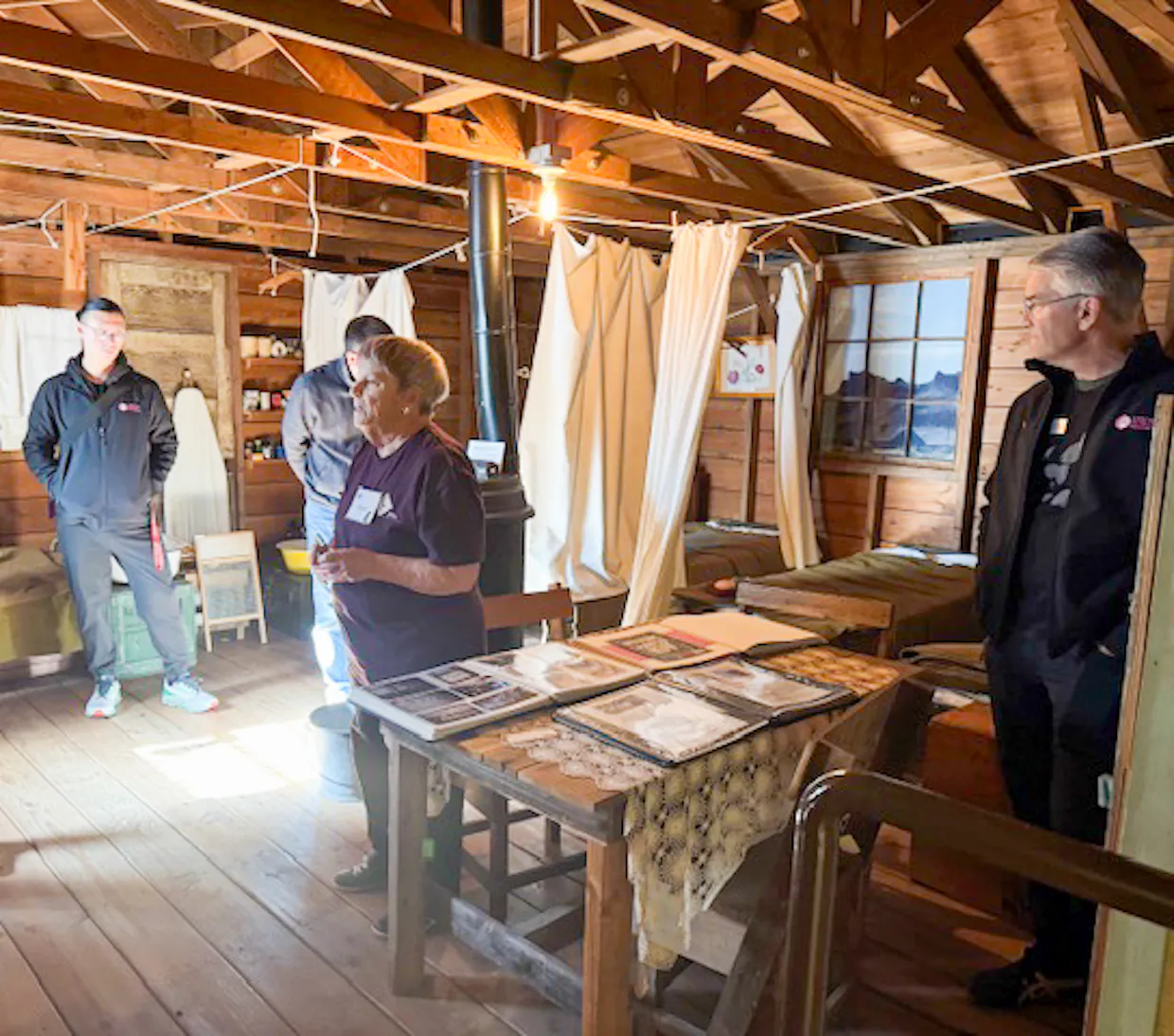 |
SSCA volunteers touring the and learning about artifacts at JAMsj |
SSCA volunteers touring the and learning about artifacts at JAMsj |
SSCA Volunteers Visit Japanese American Museum of San Jose |
SSCA Volunteers Visit Japanese American Museum of San Jose |
BY JENNY BRATTON, SSCA Program Development Manager |
BY JENNY BRATTON, SSCA Program Development Manager |
On December 13, 2025, a group of SSCA volunteers (Ron, Peter, Jay, Nicole, Lucas and Jenny) went on a guided tour of the Japanese American Museum of San Jose (JAMsj) in order to see if it would be appropriate to add it as a stop for the Japanese participants on the student exchange in March. Our volunteer tour guide Penny led us through the history of the Japanese-Americans in the area, beginning from their migration journey. We were able to see how the early Japanese-Americans were able to adapt and assimilate into American culture even though they were segregated. We also saw that their hard work and innovative practices led to very successful businesses and made Santa Clara Valley into an agricultural powerhouse. However, the most powerful part of the museum documents the Japanese-American experience of being forced into internment camps during WW2. This portion of the museum houses numerous photos, artifacts, and documents from this era. It contained a display of each of the internment camps that extended across the United States, including a replica of one of the barracks so that visitors could see the closed quarters and lack of privacy that families had to endure. It is a testament of the resilience and also the community spirit that Japanese-Americans harbored in the face of uncertainty and wartime hostility. According to the JAMsj website, it "provides a historical forum that stimulates present day discussions on civil liberties, relations, discrimination, and American identity." It can be argued that these discussions are more relevant now than ever. The last part of our tour included a visit to the rotating gallery which featured artwork by local artist Yurika Chiba. The art exhibit is named Chutohampa: Somewhere in Between and features ink and paper drawings of her 'doodles'. The museum also encourages visitors to create their own ink and paper artwork. The exhibit ends on February 8th. |
On December 13, 2025, a group of SSCA volunteers (Ron, Peter, Jay, Nicole, Lucas and Jenny) went on a guided tour of the Japanese American Museum of San Jose (JAMsj) in order to see if it would be appropriate to add it as a stop for the Japanese participants on the student exchange in March. Our volunteer tour guide Penny led us through the history of the Japanese-Americans in the area, beginning from their migration journey. We were able to see how the early Japanese-Americans were able to adapt and assimilate into American culture even though they were segregated. We also saw that their hard work and innovative practices led to very successful businesses and made Santa Clara Valley into an agricultural powerhouse. However, the most powerful part of the museum documents the Japanese-American experience of being forced into internment camps during WW2. This portion of the museum houses numerous photos, artifacts, and documents from this era. It contained a display of each of the internment camps that extended across the United States, including a replica of one of the barracks so that visitors could see the closed quarters and lack of privacy that families had to endure. It is a testament of the resilience and also the community spirit that Japanese-Americans harbored in the face of uncertainty and wartime hostility. According to the JAMsj website, it "provides a historical forum that stimulates present day discussions on civil liberties, relations, discrimination, and American identity." It can be argued that these discussions are more relevant now than ever. The last part of our tour included a visit to the rotating gallery which featured artwork by local artist Yurika Chiba. The art exhibit is named Chutohampa: Somewhere in Between and features ink and paper drawings of her 'doodles'. The museum also encourages visitors to create their own ink and paper artwork. The exhibit ends on February 8th. |
 |
From November 3-16, 2026, the Adult Exchange Program will visit the Ise Peninsula on the map of Japan on the way to Sunnyvale’s sister city Iizuka! |
From November 3-16, 2026, the Adult Exchange Program will visit the Ise Peninsula on the map of Japan on the way to Sunnyvale’s sister city Iizuka! |
Sunnyvale to Japan Group Tour 2026 |
Sunnyvale to Japan Group Tour 2026 |
BY JENNY BRATTON AND RON ZIELINSKI, Adult Exchange Program Co-Leads |
BY JENNY BRATTON AND RON ZIELINSKI, Adult Exchange Program Co-Leads |
The Sunnyvale Sister City Association will be hosting its annual tour to Japan this fall, from November 3rd to 16th. The tour is a thoughtfully curated experience by SSCA’s travel agent Yuko Ono of NTA, designed for both adults and families to discover Japan’s off-beaten paths! This year, we will be exploring the Ise peninsula, which boasts one of Japan’s most famous sacred shrines and waterfalls. The tour features the unbeatable scenery of Mt. Fuji, free time in Tokyo AND Osaka, the shrines and temples on the Kumano-Kodo pilgrimage trail, pearl divers, and a one-of-a-kind homestay experience in Sunnyvale’s sister city, Iizuka, on the island of Kyushu. The trip package covers roundtrip airfare from SFO, tourist-class accommodations, guided English-speaking tours, a bullet train ride, domestic flights, and a homestay experience with the local community in Iizuka. We are offering an early bird special pricing of $4,980 this year for anyone who applies and submits their $600 deposit by February 28th! We have already generated strong interest so we would not be surprised if we sell out a majority of our seats by the early bird deadline. For those who apply and submit their $600 deposit after February 28th, we will honor the regular price of $5,420. If you’d like to join us, we encourage you to attend our informational session on January 28th or March 4th. Registration for the session is on the Adult Exchange Program (AEP) webpage. |
The Sunnyvale Sister City Association will be hosting its annual tour to Japan this fall, from November 3rd to 16th. The tour is a thoughtfully curated experience by SSCA’s travel agent Yuko Ono of NTA, designed for both adults and families to discover Japan’s off-beaten paths! This year, we will be exploring the Ise peninsula, which boasts one of Japan’s most famous sacred shrines and waterfalls. The tour features the unbeatable scenery of Mt. Fuji, free time in Tokyo AND Osaka, the shrines and temples on the Kumano-Kodo pilgrimage trail, pearl divers, and a one-of-a-kind homestay experience in Sunnyvale’s sister city, Iizuka, on the island of Kyushu. The trip package covers roundtrip airfare from SFO, tourist-class accommodations, guided English-speaking tours, a bullet train ride, domestic flights, and a homestay experience with the local community in Iizuka. We are offering an early bird special pricing of $4,980 this year for anyone who applies and submits their $600 deposit by February 28th! We have already generated strong interest so we would not be surprised if we sell out a majority of our seats by the early bird deadline. For those who apply and submit their $600 deposit after February 28th, we will honor the regular price of $5,420. If you’d like to join us, we encourage you to attend our informational session on January 28th or March 4th. Registration for the session is on the Adult Exchange Program (AEP) webpage. |
Support Sunnyvale Sister City Association in 2026 |
Support Sunnyvale Sister City Association in 2026 |
As many of you know, SSCA is dedicated to our mission to foster cultural exchange and build lasting international connections between Sunnyvale and our sister city, Iizuka. All of our programs, including our student exchange programs, adult exchange programs, and even our most recent Sunnyvale to Japan Adult Group Tour rely on supportive individuals like you. Your generosity has the power to create a positive impact in both our local community and our sister city abroad. Sunnyvale Sister City Association appreciates any gift of any size, and as a non-profit, 501(c)(3) organization, any donation given to SSCA will qualify as a tax-deductible donation. If you would like to support us by making a donation, you can do it by using Zelle through your bank's mobile app, mailing a check, or through GiveLively. Check out our website for more details. |
As many of you know, SSCA is dedicated to our mission to foster cultural exchange and build lasting international connections between Sunnyvale and our sister city, Iizuka. All of our programs, including our student exchange programs, adult exchange programs, and even our most recent Sunnyvale to Japan Adult Group Tour rely on supportive individuals like you. Your generosity has the power to create a positive impact in both our local community and our sister city abroad. Sunnyvale Sister City Association appreciates any gift of any size, and as a non-profit, 501(c)(3) organization, any donation given to SSCA will qualify as a tax-deductible donation. If you would like to support us by making a donation, you can do it by using Zelle through your bank's mobile app, mailing a check, or through GiveLively. Check out our website for more details. |
*Keep posted for updated dates and information for each of the events listed below! |
*Keep posted for updated dates and information for each of the events listed below! |
January:
Adult Exchange Program (AEP): 2026 Sunnyvale to Japan Group Tour Registration OPEN
January 28:
AEP: 2026 Sunnyvale to Japan Group Tour General Public Information Session #1
February 28:
AEP: 2026 Sunnyvale to Japan Group Tour Early Bird Application & $600 Trip Deposit DUE
March 4:
AEP: 2026 Sunnyvale to Japan Group Tour General Public Information Session #2
March 20:
AEP: 2026 Sunnyvale to Japan Group Tour Regular Application & $600 Trip Deposit DUE
March 24-30:
Iizuka to Sunnyvale Student Exchange Program
March-April:
Hanami: Spring Cherry Blossom Viewing Event in Braly Park (TBD; dependent on weather conditions)
April 11:
Sunnyvale Earth Day Fair
April 25-26:
Cupertino Cherry Blossom Festival
April 30:
AEP: 2026 Sunnyvale to Japan Group Tour Final Payment DUE
May:
Sunnyvale Hands on the Arts Festival
June 6-7:
Sunnyvale Art and Wine Festival
June 16-25:
Sunnyvale to Iizuka Student Exchange Program
August/September:
2027 Sunnyvale to Iizuka Student Exchange Program Applications OPEN
September:
Sunnyvale State Of The City Mayoral Address (TBD)
September/October:
2027 Sunnyvale to Iizuka Student Exchange Program Applications DEADLINE
October:
AEP: 2026 Sunnyvale to Japan Group Tour Orientation & Pre-Departure Preparation Planning Session (TBD)
November 3-16:
AEP: 2026 Sunnyvale to Japan Group Tour
You can also view the SSCA calendar on our website.
|
January:
Adult Exchange Program (AEP): 2026 Sunnyvale to Japan Group Tour Registration OPEN
January 28:
AEP: 2026 Sunnyvale to Japan Group Tour General Public Information Session #1
February 28:
AEP: 2026 Sunnyvale to Japan Group Tour Early Bird Application & $600 Trip Deposit DUE
March 4:
AEP: 2026 Sunnyvale to Japan Group Tour General Public Information Session #2
March 20:
AEP: 2026 Sunnyvale to Japan Group Tour Regular Application & $600 Trip Deposit DUE
March 24-30:
Iizuka to Sunnyvale Student Exchange Program
March-April:
Hanami: Spring Cherry Blossom Viewing Event in Braly Park (TBD; dependent on weather conditions)
April 11:
Sunnyvale Earth Day Fair
April 25-26:
Cupertino Cherry Blossom Festival
April 30:
AEP: 2026 Sunnyvale to Japan Group Tour Final Payment DUE
May:
Sunnyvale Hands on the Arts Festival
June 6-7:
Sunnyvale Art and Wine Festival
June 16-25:
Sunnyvale to Iizuka Student Exchange Program
August/September:
2027 Sunnyvale to Iizuka Student Exchange Program Applications OPEN
September:
Sunnyvale State Of The City Mayoral Address (TBD)
September/October:
2027 Sunnyvale to Iizuka Student Exchange Program Applications DEADLINE
October:
AEP: 2026 Sunnyvale to Japan Group Tour Orientation & Pre-Departure Preparation Planning Session (TBD)
November 3-16:
AEP: 2026 Sunnyvale to Japan Group Tour
You can also view the SSCA calendar on our website.
|
|
|
Volunteers Wanted SSCA is looking for volunteers to help with our activities. If you are passionate about contributing to the community, please send a message to volunteer@sunnyvalesistercity.org. Current opportunities: - Student Program Manager (2)
- Program Development Manager
- Want to help with something else? Let us know!
|
Volunteers Wanted SSCA is looking for volunteers to help with our activities. If you are passionate about contributing to the community, please send a message to volunteer@sunnyvalesistercity.org. Current opportunities: - Student Program Manager (2)
- Program Development Manager
- Want to help with something else? Let us know!
|
| We Need Sponsors
As a completely volunteer-run non-profit organization (501c3), the Sunnyvale Sister City Association (SSCA) is looking for sponsors. Please help us continue to offer dynamic events to the community and support Sunnyvale’s future generations. If you are interested, please send a message to sponsor@sunnyvalesistercity.org |
We Need Sponsors
As a completely volunteer-run non-profit organization (501c3), the Sunnyvale Sister City Association (SSCA) is looking for sponsors. Please help us continue to offer dynamic events to the community and support Sunnyvale’s future generations. If you are interested, please send a message to sponsor@sunnyvalesistercity.org |
|
|
Subscribe Know someone who wants to subscribe to our newletter? Email: subscribe@sunnyvalesistercity.org. |
Subscribe Know someone who wants to subscribe to our newletter? Email: subscribe@sunnyvalesistercity.org. |
Copyright © 2026 Sunnyvale Sister City Association, All rights reserved.
You are receiving this email because you are part of the Sunnyvale Sister City Association community. Unsubscribe from this list Update subscription preferences |
Copyright © 2026 Sunnyvale Sister City Association, All rights reserved.
You are receiving this email because you are part of the Sunnyvale Sister City Association community. Unsubscribe from this list Update subscription preferences |
|
|
| |


